Tinubu appoints Odusote as first female Director-General of Nigerian Law School

By Kunle Sanni –
President Bola Tinubu has appointed Dr Olugbemisola Titilayo Odusote as the Director-General of the Nigerian Law School, making her the first woman to head the institution since its establishment in 1962.
The appointment was announced on Tuesday by Bayo Onanuga, Special Adviser to the President on Information and Strategy.
The appointment, which takes effect from January 10, 2026, is for a four-year term. Odusote will succeed Professor Isa Hayatu Chiroma, whose eight-year tenure ends on January 9, 2026.
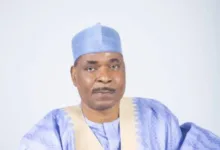



Until her appointment, Odusote served as Deputy Director-General and Head of the Lagos Campus of the Nigerian Law School. She is 54 years old.
Odusote obtained her Bachelor of Laws degree from Obafemi Awolowo University and was called to the Nigerian Bar in 1988. She also earned a Master of Laws degree from the same institution, specialising in company and commercial law, and later obtained a doctorate in law from the University of Surrey in the United Kingdom, with research interests in public law and the administration of justice.
She joined the Nigerian Law School in 2001 as a lecturer and has since held several leadership positions, including Head of the Academic Department, Director of Academics, and Head of Campus. She was also a visiting scholar at Nottingham Trent University in the UK.
Throughout her career, Odusote has published widely in local and international law journals and presented papers at various legal education conferences. She has also served on committees of the Council of Legal Education and the Nigerian Bar Association.
As Director-General, Odusote will oversee the academic and administrative affairs of the Nigerian Law School and provide strategic leadership across its campuses. She will also act as the main liaison between the institution and key legal bodies, including the Council of Legal Education, the Body of Benchers, and the Nigerian Bar Association.

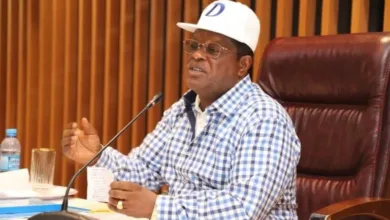
Secure a credible, defensible 2027 re-election for President Bola Ahmed Tinubu through disciplined grassroots organisation, honest governance communication, and sustained performance.
1. Turn Endorsements into Functional Structures
Convert political endorsements into ward-level mobilisation systems with clear leadership and accountability.
Maintain accurate voter data, canvassing plans, and reporting frameworks.
Institutionalise initiatives like Knock-on-Doors (KOD) as continuous citizen-engagement platforms.
Key Insight: Elections are won by structure, not sentiment.
2. Communicate Governance Outcomes Clearly
Explain reforms (fuel subsidy removal, FX reforms) in practical, local terms—jobs, SMEs, infrastructure, cost stability.
Use trusted local voices (community leaders, professionals, traditional institutions) to communicate policy impacts.
Be honest about short-term pain while clearly outlining long-term gains.
Key Insight: Credibility builds trust; denial erodes it.
3. Secure and Expand the Southwest Base
Treat the Southwest as a strategic asset that requires constant engagement, not complacency.
Resolve intra-party issues early; unity is non-negotiable.
Support regional coordination by respected leaders and ensure visible federal impact across infrastructure, education, and economic hubs.
Key Insight: A solid base reduces national pressure.
4. Integrate Youth and First-Time Voters
Move beyond slogans—involve young people in campaign operations, digital engagement, and polling-unit management.
Highlight concrete youth-focused policies: student loans, skills development, digital and creative economy growth.
Key Insight: Participation creates ownership; ownership creates loyalty.
5. Strengthen Party Machinery Early
Sustain voter registration and PVC awareness continuously.
Train polling-unit agents well ahead of election season.
Establish a calm, factual rapid-response system to counter misinformation.
Key Insight: Election day reflects years of preparation.
6. Balance Local Mobilisation with National Reassurance
Present Tinubu as a national reformer and stabiliser, not just a party leader.
Maintain engagement with business, labour, civil society, and traditional institutions.
Emphasise unity, fairness, and long-term national recovery.
Key Insight: Presidential elections are both local and national contests.
7. Deliver Tangible Results
Accelerate projects with visible, everyday impact.
Ensure transparency, responsiveness, and accountability in governance.
Let performance—not promises—drive the campaign narrative.
Key Insight: Performance is the strongest campaign message.
Bottom Line
Structure beats noise
Governance beats propaganda
Unity beats arrogance
Delivery beats promises
With disciplined organisation, honest communication, and sustained performance, 2027 is not only winnable—it is defensible.