Urban redevelopment: Time to reimagine our cities, by John Ogunlela
Our cities keep growing horizontally along with the population. Mass transit, where it exists, is stagnant. Fuel prices are out of sync with income.
The result of this is a workforce that feels increasingly unable to cope with transport costs. One of the formal responses is that several organizations including government officers have reduced the number of work days in the week. That is Cost.
The cost will continue to mount and Nigerians will continue to feel it with increasing pressure – until something realistic is done. The logical solution is to grow our cities vertically.
Vertical growth means multistory apartments for our cities. This means urban redevelopment. So many of our sprawling districts are right now, in real terms, sitting on lands that are too costly for them. You will know when you factor the cost of transportation from residence to work and plot it against taxes and income, making provisions for savings and retirement. You will see that the cost of transportation is simply not sustainable and what to do is reduce the cost of moving from home to work – which you can do by installing mass transport means or by reducing the distance between both locations.
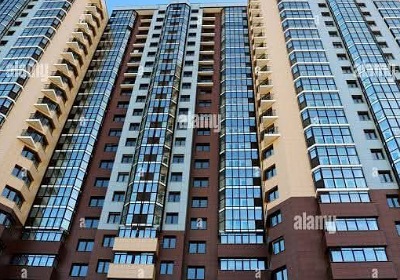
Urban redevelopment which replaces sprawling districts with high rise apartments is one tested solution. A plot of land containing 10 bungalows housing 10 families can be turned into two blocks of 10-story apartments with two apartments per floor. That means 40 families living on the same land space – with spaces for a tennis court and a basketball court and even some green areas.




In practice. A schedule is drawn up to move residents of the area to be redeveloped into a prepared temporary location. The first few floors will be given to the original property owners and from there to the sky will belong to the state-appointed developer who will sell apartments at agreed prices to new occupant. This reduces the spread of the city and leaves spaces for greens, clean air and more. The hardest part is building the first temporary residences, but even this can be resolved once there is a will and according laws and regulations are made.
It has implications for power supply because you must run these buildings with lifts. Many of our planners turm away at this point and conclude high rise is not a solution for us. Yet it can be done, especially with decentralized power generation.
Imagine a worker who commuted from an Iyana Ipaja bungalow, now coming from the seventh floor in Surulere. He gets to work more punctually and gets home earlier and less stressed. He spends less on transport but now pays a little more for decentralized power because the lifts simply have to work. But he is happier and healthier because he breathes in less noxious gases and he can be with his family for more hours everyday. The city is also more organized and planning is easier for administrators. From policing to community security, everything is easier because the neighborhood has structured development.
All state capitals must start discussing and implementing this option by creating high rise districts within the heart of the city. Those should be designed to cater to both the middle and the upper classes as a solution to unreasonable financial implications of commuting and accommodation, if not for the present, it should be done with the future in mind. The trend is inescapable and from a strategy, it will only become a necessity. Those who plan earlier than necessities come upon them are called strategies.