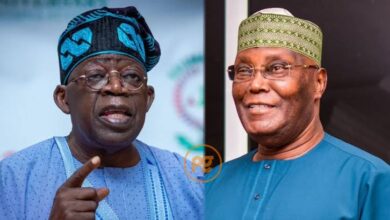
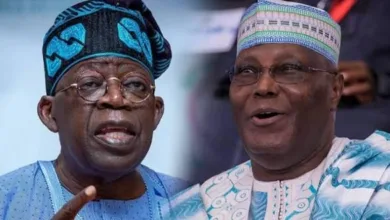
Why APC and PDP are here to stay — by Kayode Adebiyi

I have been preaching this gospel for over a decade. Long before my friend, Tope Fasua, even publicly toyed with the idea of starting a political party or running for President in 2019, I told him plainly that it would not work.
In Nigeria, small parties will never be effective, no matter the personal credibility, moral authority, or intellectual brilliance of their founders. The system is simply not designed to reward political minimalism.
APC and PDP are not temporary inconveniences in Nigeria’s political journey; they are structural realities. For better or worse, Nigeria is a two-party democracy. That reality is not a slogan. It is the outcome of history, incentives, money, geography, and power.
Despite the current travails of the PDP, it still enjoys deeper traction, stronger grassroots cohesion, and far more institutional credibility than the current assemblage of political nomads who have congregated and hijacked one of the numerous ineffective political parties in pursuit of power in 2027. What we are witnessing is not a movement; it is a coalition of ambition. Ambition without roots always withers.


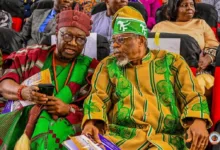
They will fail because the ADC project is not organic.
The APC succeeded precisely because it was organic. It was not a gathering of desperate political personalities; it was a merger of legacy parties with real electoral histories. The ACN and CPC, led by Tinubu and Buhari respectively, had already contested and won elections. They knew their political catchment areas.
They understood voter psychology. They controlled defined territories. Coming together therefore made strategic sense. It was the aggregation of proven strengths, not the invention of relevance from scratch.
Beyond that, each of the legacy parties that formed APC had tested structures, loyal voter bases, functioning grassroots machinery, and regional strongholds. They had tasted victory and defeat, learned lessons, and built credibility over time.
When they merged, they pooled real political capital, not just press conferences, social media hype, and borrowed outrage. That is why APC endured, stood the test of time, and was able to unseat a PDP that had grown complacent and intoxicated by power.
The present ADC experiment is nothing like that. Strip away the rhetoric and you are left with a hollow shell. Mark my words: after 2027, when this project predictably collapses, you will watch most of its current occupants quietly migrate back to their original homes in APC and PDP, already positioning themselves for 2031.
They understand the underlying logic of Nigerian power. The pendulum will swing back to the North, and proximity to the dominant parties will matter more than idealistic posturing.
This is also why Nyesom Wike is not stupid for refusing to leave the PDP. He knows exactly what he is doing. For convenience and continued relevance, he supports an incumbent president from another party, yet he is fighting tooth and nail to retain control of the political structure in his home state. Why? Because he understands a fundamental rule of politics: all politics is local. You cannot bargain for power at the centre if you have nothing formidable to bring to the table at the grassroots.
Wike’s calculation is cold, rational, and rooted in political reality. Many who mock it do not understand the game being played.
So, what should young people do?
They should not romanticize political shortcuts.
Young Nigerians must learn to bid their time. They must learn the trade, understand the machinery, build alliances, organize from within the two dominant parties, the APC and PDP, and patiently wait for their moment.
Real change does not happen by standing outside the system throwing stones. It happens by entering the system and slowly rearranging the furniture. Ward by ward, LGA by LGA, state by state, this is how power is built.
This is not a four-year or eight-year project. It is a generational project.
Politics is a marathon, not a 100-meter dash.
Nature abhors a vacuum. The current political elite will not be around forever. Power always looks permanent until suddenly it isn’t. That is why younger, more reform-minded elements must populate these parties now. In 15 to 20 years, through persistence and internal contestation, they can take control of these structures and reshape them in their own image.
Trying to defeat these two behemoths from the outside is not revolutionary; it is naïve. In Nigerian politics, naïveté is the most expensive mistake of all.
Finally, make no mistake about this: PDP will return. When it does, it will come back in a big and massive way to challenge APC in 2031.
I know many will not take my assertions here seriously, and some will laugh them off as usual. But there is a reason my political predictions since 1999 have never failed to come to pass.