A riposte to Yinka Olujimi on Atiku’s fuel subsidy catastrophe — by Olabode Opeseitan
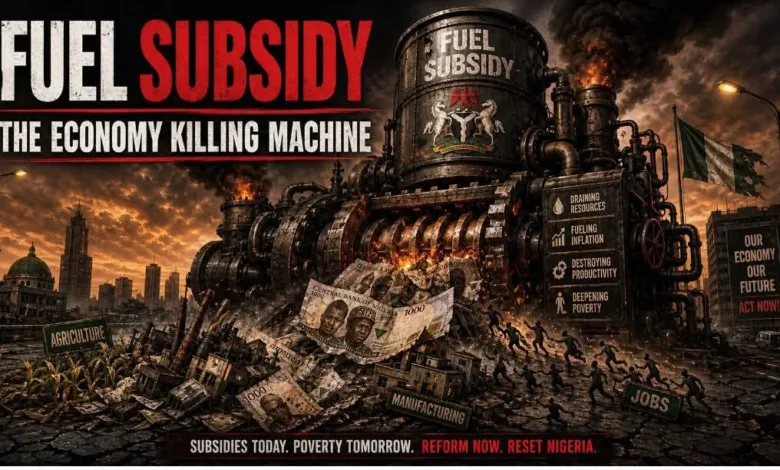
Mr Olujimi, the real issue is not whether governments should subsidise citizens. The real issue is what Nigeria’s fuel subsidy became. It was funded with debt, overdrafts and forward-sold crude oil. It hollowed out the economy and pushed the country to the edge of insolvency.
These are the facts.
- In 2022, fuel subsidy consumed 100% of Nigeria’s net oil revenue.
- In 2023, subsidy and debt servicing swallowed 90% to 97% of federal revenue.
- NNPC remitted zero to the national purse.
- Twenty seven states could not pay salaries without borrowing.
- The Federal Government printed ₦27 trillion through Ways and Means, unbacked by productivity.
- The fuel subsidy was never free; it was an expensive loan taken against our future. Decades of borrowing to keep petrol cheap have successfully metastasised into a structural fiscal crisis: Nigeria’s public debt now stands at ₦159.35 trillion, and the 2026 Appropriation Act allocates ₦15.81 trillion exclusively for debt servicing. Yesterday’s artificial comfort has become today’s economic handcuffs.
This was not a cushion. It was a fiscal trap.
Smuggling also destroyed the subsidy system. Nigeria was subsidising petrol for neighbouring countries, not for its own citizens alone. Billions in revenue were lost through cross‑border diversion, making the subsidy even more unsustainable.


You mentioned hardship. Hardship is real, but it was created by decades of subsidy‑induced collapse. The government did not remove subsidy and abandon citizens. It rolled out the largest cushioning programme in decades.
- Over 100,000 free CNG conversion kits and hundreds of CNG buses to cut transport costs by up to 80%. The government has just announced plans to ensure that transporters pass on those benefits to commuters.
- A 133% increase in the national minimum wage from ₦30,000 to ₦70,000.
- Zero‑interest student loans through NELFUND, payable two years after NYSC. Commercial bank lending rates are up to 33%, with no guarantees. NELFUND provides guaranteed access, zero interest and a monthly stipend so students can focus on their studies. That is a form of subsidy.
- A cumulative ₦2.9 trillion Infrastructure Support Fund for all 36 states to upgrade hospitals, schools and rural roads.
- ₦200 billion in grants and loans for MSMEs and manufacturers.
- A YouthCred Initiative with a total budget of ₦500 billion to fund over 500,000 young entrepreneurs with collateral-free loans ranging from ₦200,000 to ₦2 million.
- The Creative Economy Development Fund (CEDF) structured as a $100 million initiative.
- Thousands of tonnes of grains and fertiliser released from strategic reserves.
- Suspension of duties on essential food imports to reduce prices.
On agriculture, the government is already subsidising farmers through targeted, smart interventions funded by subsidy savings.
- The 22 million bag fertiliser programme, with free urea and NPK for registered farmers.
- The National Agricultural Growth Scheme providing 50 to 75% subsidies on seeds, fertilisers and agrochemicals.
- The National Agricultural Development Fund (NADF) has been scaled up, with ₦132 billion allocated directly to support farmers with low‑interest loans and grants.
- Zero tariffs on farming equipment and machinery.
- Soil Health Laboratories in all 774 local government areas are in phased rollout, with data collection and readiness assessments underway. This will help to solve one of the most expensive and persistent problems in Nigerian agriculture: input waste caused by blind fertiliser application.
- Subsidised mechanisation and solar irrigation through international partnerships.
Countries that subsidise efficiently do so because they have resilient systems. That is what the Tinubu government is building through digital farmer verification, transparent host‑community trusts, modern energy transition programmes and structured education financing. These are the foundations that make sustainable subsidies possible.
Nigeria is subsidising agriculture, transport, education, wages and production. What it cannot subsidise is petrol consumption that previously consumed all oil revenue and collapsed the federation.
On Atiku’s proposal, selling crude cheaply to refineries is simply subsidy at the upstream level. If crude is sold below market price, the Federal Government absorbs the loss. That is the same model that consumed all oil revenue, collapsed NNPC remittances and forced the country into unsustainable borrowing. Changing the point of application does not change the economic devastation.
The Petroleum Trust Fund (PTF) you referenced was abolished in 1999. Nigeria has been transitioning from ad-hoc interventionist structures like PTF to constitutionally grounded institutions like OMPADEC and later NDDC. Petroleum-funded development today runs through two modern, law-backed institutions with measurable results.
Host Community Development Trust (HCDT), created under the Petroleum Industry Act, requires oil companies to deposit 3% of annual operating expenditure into community trusts. It holds ₦373 billion, monitors 536 projects across the Niger Delta, and has delivered upgraded schools (e.g., Obagi Community School, Rivers State), health centres, solar boreholes, and vocational centres.
Petroleum Technology Development Fund (PTDF) shifts focus from PTF-style roads/hospitals to human capital and technology: thousands of fully funded MSc/PhD scholarships in engineering and geosciences (locally and in UK, Germany, France); commercialised research like a UAV/Li-Fi pipeline monitoring system against crude theft; upgraded 26 specialised university departments with buildings, solar power, IT facilities and modern laboratories, and 214 ICT centres across universities to support energy research.
Both mechanisms are structured, audited, and legally grounded, delivering infrastructure, education, and technology without reverting to the fuel-subsidy model that once drained oil revenue and strained the federation.
Nigerians deserve support, but not a return to a system that nearly destroyed the republic. Atiku’s proposal, whether framed as pump subsidy or crude discount, is a return to the same destructive model.
That is my position.