Atiku: When political convenience rewrites economic conviction — by Kayode Adebiyi
There are moments in politics when a politician changes his position because circumstances have changed. That is understandable. Serious leadership sometimes requires the courage to revise an earlier position when evidence proves it wrong.
But there is another kind of political reversal: the kind that appears to be driven less by new economic evidence than by the search for votes.
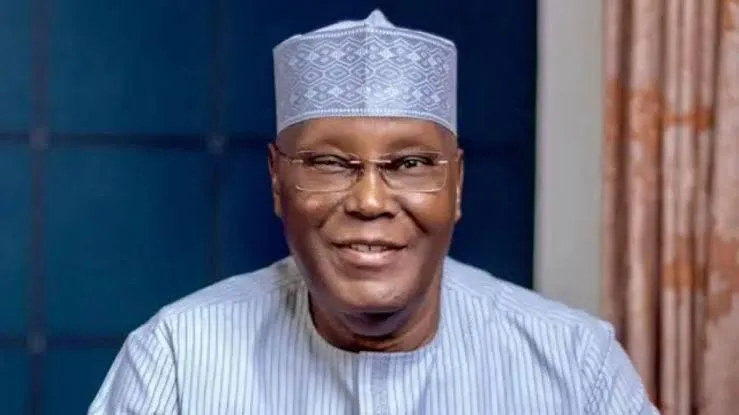
The reported declaration by Atiku Abubakar that he would restore petrol subsidy if elected president in 2027 deserves precisely that kind of scrutiny.
This is not simply because Atiku has changed his position. It is because the position he is now abandoning was one he had defended repeatedly and emphatically.

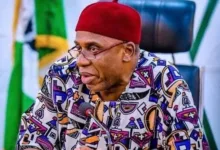
During the 2023 presidential campaign, Atiku was not an advocate of maintaining the petrol subsidy. Quite the opposite. He said he had always advocated its removal, recalled his role in the subsidy-removal committee during the Obasanjo administration, and argued that he would continue the process. His campaign said the savings could instead be directed towards areas such as transportation and education.
In 2022, he went further, describing the subsidy as a fraudulent system and arguing that Nigeria needed to move away from it. His 2023 policy position was consistent with that argument.
Even after President Bola Tinubu removed the subsidy in 2023, Atiku’s principal criticism was not that subsidy removal itself was fundamentally wrong. His criticism was about the manner and sequencing of the reform. In 2024, he again stated that he had “always advocated” subsidy removal, while arguing that the Tinubu administration had handled the process poorly.
That history makes his promise to restore subsidy if he’s elected during upcoming 2027 presidential election a legitimate subject of public scrutiny and a sign that Atiku has joined the gang of people talking cho-cho-cho.
What has changed?
Has Atiku discovered new economic evidence proving that the subsidy he previously considered unsustainable is now economically desirable?
Has he produced a new fiscal model showing how Nigeria will finance it?
How much will the government spend annually?
Where will the money come from?
What happens when international oil prices rise?
What happens when crude production falls?
Will the subsidy be universal or targeted?
And, most importantly, what will prevent the same opacity, rent-seeking and corruption that Atiku himself previously identified as fundamental problems within the subsidy regime?
These are not trivial questions.
The international economic evidence since 2023 does not support the simplistic claim that subsidy removal has produced nothing but hardship. The IMF says Nigeria’s major reforms, including the removal of costly fuel subsidies, have improved macroeconomic stability and resilience. It also says the reforms have strengthened investor confidence and helped Nigeria return to international capital markets.
The World Bank has similarly reported stronger economic growth, improved government revenue and a reduction in the fiscal deficit following the reforms, while stressing that the gains must be translated into better living standards.
That last qualification is important.
The argument for subsidy reform cannot simply be that Nigerians should endure hardship indefinitely because some macroeconomic indicators are improving. The purpose of economic reform is ultimately to improve people’s lives.
But neither can the answer to hardship be to resurrect an expensive and historically problematic system merely because it is politically popular.
Nigeria has spent decades confronting the contradiction of subsidising petrol while simultaneously lacking adequate resources for infrastructure, healthcare, education, transport and other public priorities. The IMF has specifically urged Nigeria to ensure that the fiscal savings from subsidy removal actually reach the budget and are used for productive and protective spending.
That is where the political conversation should now be.
If prices can be reduced through increased domestic refining and greater competition, government should pursue those measures aggressively, and indeed the present government is pursuing those options vigorously.
But returning to subsidy simply because an election is approaching requires a much stronger economic argument than a campaign promise.
There is a particularly uncomfortable irony here.
A politician who spent years explaining why subsidy was unsustainable cannot suddenly present its restoration as a straightforward solution to today’s hardship without explaining why the arguments he himself made before the election of 2023 no longer apply.
Political positions may evolve. Economic arguments may change.
But when the change concerns a policy that affects the fiscal survival of a country of more than 200 million people, voters deserve more than a slogan.
They deserve the numbers.
They deserve the assumptions.
They deserve the funding mechanism.
They deserve to know what happens when the money runs out.
And they deserve an explanation of why a policy once described as fraudulent and unsustainable has suddenly become a campaign solution.
Nigeria’s economic future is too important to be reduced to electoral arithmetic.
No presidential candidate, whether incumbent or opposition should be allowed to treat the country’s economic architecture as a campaign prop.
If subsidy should return, make the economic case.
If it should not, explain why.
But do not tell Nigerians one thing when seeking their votes and the opposite thing when seeking the presidency without accounting for the difference.
The country has paid too high a price for policies designed around political convenience, and this statement made by Atiku is enough for Nigerians to finally seal his fate, and declare; to your tent oh Atiku, never again would affliction arise the second time.
–Adebiyi, a Business Executive wrote from United Kingdom