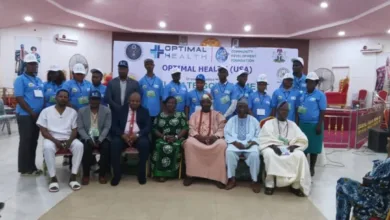
FG launches alcohol policy to tackle harmful consumption, illicit trade

The Federal Government has launched the Nigeria Alcohol Policy and its Multisectoral Implementation Plan (2026–2030), aimed at reducing alcohol-related harm while promoting industry growth, job creation and economic development.
Speaking at the launch on Thursday, the Coordinating Minister of Health and Social Welfare, Prof. Muhammad Ali Pate, said the policy would provide a unified framework for addressing alcohol-related challenges. He said alcohol policy should be treated as a national development issue involving public health, economic growth and good governance.
Pate, who was represented by the ministry’s permanent secretary, Daju Kachollom, noted that while the alcohol industry contributes to manufacturing, employment, agriculture and domestic value chains, harmful consumption is associated with diseases, injuries, violence, mental health challenges, financial hardship and reduced productivity.
He disclosed that the latest available World Health Organisation data put Nigeria’s total alcohol consumption at 3.2 litres of pure alcohol per person aged 15 years and above in 2024. He also cited Federal Road Safety Corps figures showing that 9,570 road crashes occurred nationwide in 2024, resulting in 5,421 deaths, with driving under the influence identified as a contributor to road accidents.




The minister disclosed that the policy focuses on four key areas: harm reduction and health promotion; industrial and economic development; multisectoral coordination and governance; and monitoring, evaluation, accountability, research and learning.
Pate said the government would not undermine legitimate businesses but would promote responsible industry practices based on standards for safety, quality and traceability. He also raised concerns over illicit alcohol, saying industry estimates indicate that about 40 per cent of spirits and wines are illicit or unrecorded, with an estimated annual government revenue loss of more than N428bn.
He stressed the need for a whole-of-government approach, noting that alcohol-related issues cut across health, industry, finance, trade, regulation, transport and communities. He added that the policy aligned with the Renewed Hope Agenda, the Nigeria Health Sector Renewal Investment Initiative, the African Union Agenda 2063, the Sustainable Development Goals and relevant WHO frameworks.
Pate explained that the success of the policy would be measured by its impact rather than its launch, urging stakeholders to support its implementation. “Our objective, therefore, is not simply to have a national alcohol policy on paper by 2030. It is to have a policy that has translated into healthier people, safer communities, more responsible industry practices and stronger institutions,” he said.