Obi describes Nigeria’s borrowing pattern as ‘Debt without growth’
…contrasts Nigeria’s GDP drop with Bangladesh’s economic surge
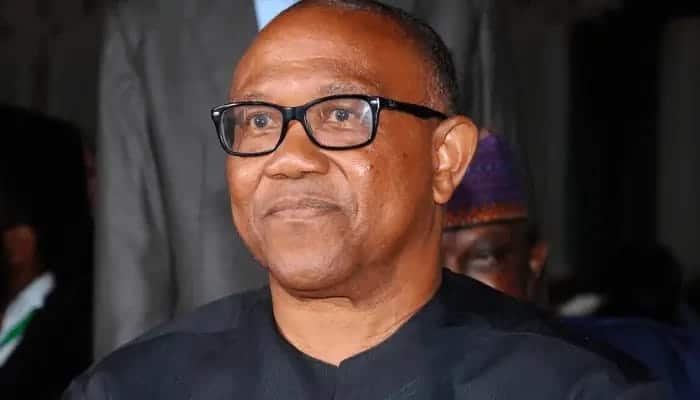
Former presidential candidate, Peter Obi, has criticised Nigeria’s rising debt profile, describing the country’s current borrowing pattern as a “debt without growth” dilemma and contrasting it with the economic progress recorded by Bangladesh.
Obi made the remarks in a post on his X handle titled “Borrowing Without Growth: Nigeria’s Debt Dilemma,” while reacting to recent debt data from the World Bank. He expressed concern over what he described as the poor utilisation of borrowed funds.
According to him, Nigeria has become the third-largest debtor to the World Bank’s International Development Association (IDA), with outstanding obligations estimated at about $18.7 billion. Bangladesh, he noted, tops the IDA debt ranking with approximately $23 billion.



“There’s nothing inherently wrong with borrowing. Nations borrow to improve productivity and stimulate growth. Debt becomes a problem only when it finances consumption, inefficiency or corruption rather than investment,” Obi wrote.
To illustrate his point, Obi compared Nigeria’s economic performance with that of Bangladesh over the past decade.
He noted that while Bangladesh’s nominal GDP stood at about $195 billion in 2015, with per capita income slightly above $1,235, the country’s economy expanded significantly between 2024 and 2025 to between $460 billion and $500 billion, with per capita income rising to about $2,700.
“In a decade, Bangladesh more than doubled the size of its economy, lifted incomes and strengthened its export base — evidence that borrowed resources were largely channelled into productive sectors such as manufacturing, textiles, energy and human capital,” he stated.
Obi contrasted this with Nigeria’s trajectory over the same period. He said Nigeria’s GDP was about $490 billion in 2015, with per capita income around $2,600 to $2,700, but has since declined to below $250 billion, with per capita income now estimated between $850 and $1,000. He attributed the decline to weak productivity growth, currency instability, structural inefficiencies and corruption.
“The contrast is instructive. One country borrowed and expanded production, exports and incomes. The other borrowed but saw declining economic strength and living standards. This suggests that the real issue is not the size of borrowing, but the use of borrowed funds. Debt tied to infrastructure, industry and human development fuels growth. Debt tied to consumption, leakages and corruption deepens stagnation,” Obi added.