Olaopa backs education reforms, warns against phasing out NCE programme
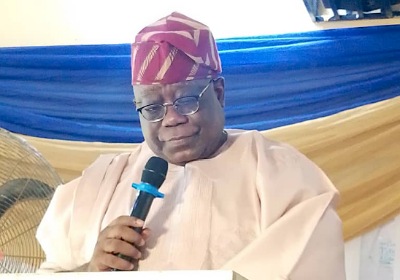
The Chairman of the Federal Civil Service Commission (FCSC), Prof. Tunji Olaopa, has commended President Bola Tinubu for his reform initiatives in Nigeria’s education sector. He gave the commendation during the 2nd Distinguished Personality Lecture of the Emmanuel Alayande University of Education, Oyo, held to mark the second anniversary of the Vice Chancellor, Prof. Olanrewaju Olaniyan.
Speaking on the topic “Reforming the Reform of the Education Sector in Nigeria”, Olaopa urged the Federal Government to advance the NCE-B.Ed. dual-mode of higher education. He said tertiary education globally thrives on a three-tier structure of universities, polytechnics, and colleges of education, each complementing the other to meet human capital needs.
He warned against a drift towards subsuming the Nigeria Certificate in Education (NCE) under the Bachelor of Education (B.Ed.) due to the rising preference for straight four-year university degrees. Such a trend, he cautioned, could lead to the gradual phasing out of NCE programmes, resulting in a decline in enrolment at colleges of education.

Olaopa advocated innovation in curricula and institutional recalibration to balance theoretical learning with practical teaching skills. He stressed that the objective should be to strengthen NCE certification while producing educators with both scholarly expertise and hands-on proficiency.



Commending the efforts of the Minister of Education, Dr. Morufu Tunji Alausa, under the Renewed Hope Agenda, Olaopa described recent interventions as refreshing. These include improving access and quality in basic education, revamping Technical and Vocational Education and Training (TVET), and introducing entrepreneurial grants to bridge youth unemployment and skills gaps.
He also highlighted reforms aimed at enhancing learning outcomes, equitable access, and governance in the education system. Notable among these are the drive for foundational literacy and numeracy, sustainable energy projects in universities, and tackling examination malpractice through computer-based testing in major examinations.
Olaopa lauded the anti-bullying policy for safer school environments and praised the 7.3% budgetary allocation to education — the highest in Nigeria’s history. While below UNESCO’s 15–20% recommendation, he said the increase signals a strong commitment to prioritising education as a driver of socio-economic transformation.
He further noted the administration’s focus on employability by reviewing and upgrading curricula, integrating technical, vocational, and entrepreneurial education with digital technologies and artificial intelligence to prepare Nigeria for the demands of the evolving global economy.