One dark Friday morning: A child’s memory of february 13, 1976, by Steve Babaeko
It was still dark that morning, February 13, 1976 when I woke to the low hum of a spinning vinyl. I was five, maybe going on six. The record player scratched out a familiar tune from the Voice Of The Cross, their falsetto rising softly above the morning stillness in our modest Army barracks along Orlu Road in Owerri, southeastern Nigeria.
We lived in what was known as a basha, a makeshift one-room apartment cobbled together for the rank and file and their families. The building had a pit latrine and a bathing space behind it, both shielded by corrugated iron sheets that clattered in the wind and rain. That life was simple and rugged but it was all we knew.
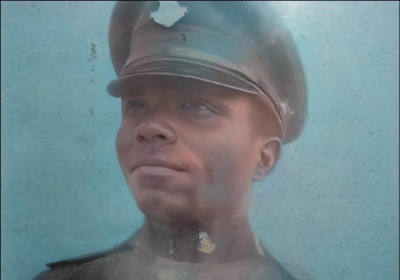
My father, David Adeyemi Babaeko, a sergeant in the Education Corps of the Nigerian Army, had enlisted shortly after the Ciivil War. He was already up, methodically preparing for parade. I remember the steam rising from a dented Mess Tin pan, what we children mispronounced, like everyone else in the barracks, as “Messin pan.” The water in it was boiling atop an iron stove, angrily hissing as though in protest of the day ahead.
I stirred on the thin mat I shared with my siblings on the floor. My father was seated on a wooden stool, gently polishing his boots with the same reverence one might offer a sacred object. There was no alarm clock, never had been, but he rose with precision every morning, a quiet embodiment of discipline. By 6:15 a.m., he was dressed in a crisply starched army-green uniform, the shine on his boots reflecting a faint glow from the kerosene lantern. Without a word, he tucked in his shirt, adjusted his cap, and stepped into the dim morning light.

Moments later, my mother’s voice shattered the calm.
“Get up! Go and bathe! You’ll be late for school!” she yelled, a little too loud for that hour. It was Friday, for me, the best school day of the week. Friday meant the promise of rest, of weekend play and stolen moments of freedom.
I hurried to the back, splashed some water on myself in the cold open-air bathing corner, then claimed falsely that I had scrubbed properly. My mother didn’t believe me, but let it go. The radio was on by now, the announcer reading headlines. I didn’t pay much attention; I was more worried about making it on time to Orlu Road Primary School, where lateness earned you strokes of the cane.
Bag slung over my shoulder, I stepped outside. And then the world shifted.
There, on the weather-worn bench in front of our basha, sat my father, still in full uniform. His cap lay in his hand, his head bowed low, shoulders stiff with something unfamiliar. A single stream of tears cut a path down his face. Until that moment, I had never seen my father cry. Not once. Not during our hardest days. Never.
“Go and tell your mother to increase the volume of the radio,” he said, barely above a whisper.
I ran inside with the message.
My mother turned the knob on the old radio until the announcer’s voice blared across the compound like a siren of doom:
“The Head of State and Commander-in-Chief of the Armed Forces, General Murtala Ramat Mohammed, has been assassinated… shot this morning in Lagos by mutinous soldiers…”
The walls of the barracks seemed to close in. Outside, neighbors emerged from their rooms, some still tying wrappers around their waists, drawn by the gravity of what they had heard. The air was heavy with confusion, fear, and the sharp, electric silence that precedes unrest.
That morning, the ordinary collapsed into the extraordinary. The rituals of boot-polishing, radio hymns, and Friday school runs were replaced by a new kind of reality, one that revealed how fragile the structure of order could be, even in a soldier’s household.
Years later, I would come to understand the weight of what my father must have felt in that moment: grief for a nation, for a fallen leader cut down in his prime at the unripe age of thirty seven and perhaps for the uncertain future we all suddenly faced.
But that day, all I knew was that the strongest man I had ever known was crying.
And so began the day Nigeria changed and with it, my childhood.
P.S. Had he not been cut down by assassins’ bullets in 1976, General Murtala Ramat Mohammed would have celebrated his 87th birthday on November 8, 2025.