Our security challenge: Time to embrace state police, by Ismail Omipidan
My heart goes out to all those who have lost their loved ones to the criminal activities ravaging our country. The truth is, we miss the point each time we introduce religion or ethnicity into criminal acts. Criminals are criminals, and they should be treated as such. Ethnic or religious profiling will not help us in anyway. When Boko Haram started back then, some northerners saw it as a Kanuri affair, while other Nigerians regarded it as the North’s problem. But we know better today. Let’s rise in unison to fight this menace as Nigerians, not as Igbo, Hausa, Yoruba or as Muslims or Christians.
Before the 2015 presidential election, one of the key promises made by the then-opposition All Progressives Congress (APC) was the establishment of a decentralised policing system. They argued that true federalism would guarantee such a structure.
To demonstrate what appeared to be a commitment to that agenda, a committee was set up, chaired by Mallam Nasir El-Rufai, with Senator Olubunmi Adetunbi serving as secretary. I was the Political Editor of The Sun at the time and played a role in advocating for the committee’s work. However, what became of the committee’s report remains unknown till today.
Sadly, from then till now, it is clear to any discerning Nigerian that our current security architecture does not seem to be working. Or does anyone genuinely believe it is working?


Make no mistake; the failure of our security system did not start today. ‘E don tey’ as some would say. I’m aware there are those who hold the extreme view that “there was a country” called Nigeria. While I do not dismiss the sentiments behind such a perspective, majority of us still believe that there is a country called Nigeria. The challenge, however, is that even among those of us who still believe in the country’s existence, our loyalty often lies more with our tribe, state, ethnicity, or religion than with Nigeria itself. In other words, the sharp machete has no handle, while the one with a good handle is blunt. Neither serves us well.
This is why I believe it’s time to end the cycle of pretense by our leaders when it comes to national security. Enough of these endless security summits and talks that rarely produce tangible results.
In 2024, Speaker Tajudeen Abbas convened what he called a dialogue on security. From that gathering, most of the participants were unmistaken in their preference for a state police, insisting that it was the right path forward. The dialogue, which took place just as I was putting finishing touches to my book, ‘Persona Non Grata’, encouraged me to devote some space to discuss state policing and why I believe it is necessary and desirable. It was my modest attempt to analyse the challenges of our country’s security situation and to offer ideas that could provoke Nigerian leaders to pause, reflect, and consider how best to build a functional and sustainable security architecture.
Sadly, one year after, we are still dilly-dallying over the matter and very soon, we will be talking yet about another security summit. Come on! What happened to previous recommendations? What happened to the promise to give us a decentralised policing system?
The truth is, the unwieldy nature of our brand of federalism has always been a topic of debate. Yet, while many members of the elite and political class passionately advocate for reform when they’re out of power, they begin to prevaricate the moment they get into government.
I recall that early in 2018, at a security summit organised by the Senate, the Federal Government threw its back behind the agitation for the establishment of state police, saying it was clearly the way to go in the face of multifaceted security challenges confronting the country.
The then Vice President, Prof. Yemi Osinbajo, gave this indication at the event held in Abuja. He said the nature of the country’s security challenges was both complex and known, adding that “securing Nigeria’s over 900,000sq km and its 180 million people requires far more men and materials than we have at the moment. It also requires a continuous reengineering of our security architecture and strategy. This has to be a dynamic process.
“For a country of our size to meet the one policeman to 400 persons prescribed by the United Nations would require triple our current police force; far more funding of the police force and far more funding of our military and other security agencies.
“We cannot realistically police a country the size of Nigeria centrally from Abuja. State police and other community policing methods are clearly the way to go.”
Unfortunately, the same administration made a U-Turn to say its position was misunderstood by some of us. How long shall we continue to prevaricate over this matter?
Interestingly, every time we talk about state police, some will say governors will abuse it as if the current federal police is not being abused by the same governors.
As at the last count, I understand all the states of the federation have signed on to the establishment of a state police. So, what are we still waiting for?
As a media consultant to the Senate Committee on Constitution Review in the 7th Senate, and as someone who worked very closely with former Deputy President of the Senate, Senator Ike Ekweremadu, I have followed closely the debate for and against decentralised policing system, and I have come to the inevitable conclusion that state police is what we need, if we are serious about confronting our current and future security challenges frontally.
In case our lawmakers decide to change their minds and stop wasting our resources on endless security summits, they could revisit the report of Ekweremadu’s committee, which highlighted key legal and policy provisions that need to be reviewed whenever we become serious about establishing state police.
The committee explained the need to amend Sections 214 and 215 of the constitution that empower the federal government to exclusively control the police force. It also recommended removing “police” from Item 45 of Part I of the Second Schedule, to allow states to establish their own police services under approved guidelines. Additionally, the National Assembly would be empowered to provide the framework for the establishment, structure, and powers of the state police.
It submitted further that the powers of state governors should be limited to making policing policies and should not extend to the operational use and control of the police, just like the National Judicial Council (NJC), and that the Federal Police Service should exercise a level of oversight over the activities of state police among others.
Ekweremadu declared that: “The choices before us are clear. One is to continue doing things the old way and continue to get the old result. The other is to embrace a change by facing the realities on ground and by borrowing a leaf from other vast and pluralistic federal states that have nevertheless been able to secure their territories. While the choice is ours, let us never forget that the choice we make today will shape our future.” I agree with him.
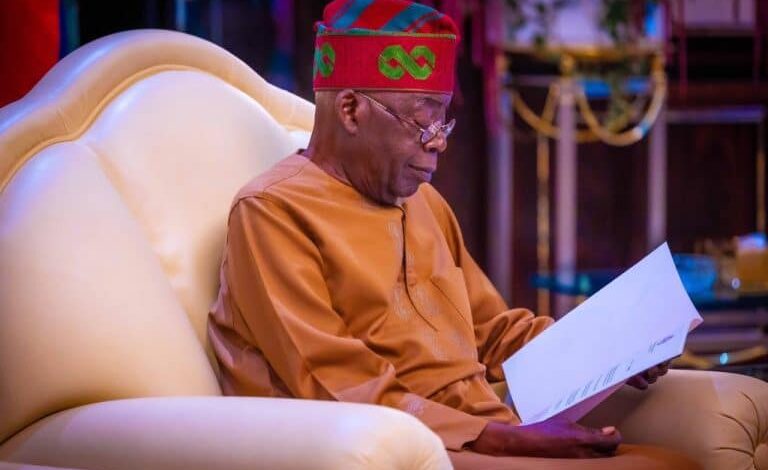
Interestingly, President Bola Ahmed Tinubu’s position on state police is unambiguous. Mr. President, what exactly are we still waiting for, sir?