Peter Obi, illusion of liquidity: Why saving money is an executive failure — by Nnaemeka Ikerionwu
The debate over state fiscal management often pits the discipline of saving for a rainy day against the urgency of spending for developmental impact. In the context of Nigerian sub-national governance, where infrastructure deficits are monumental, the choice between bank deposits and capital projects is not just a financial decision; it is a profound statement on a leader’s philosophy of power.
Again, I will love to explores the argument that, for a state governor, liquidity is a tool for transformation, not a trophy for the balance sheet.
In the corridors of power, the measure of a leader is not found in the digits sitting idle in a commercial vault, but in the tangible transformation of the landscape they were elected to serve. There is a growing narrative in Nigerian politics that celebrates saving state funds as a hallmark of integrity. However, when viewed through the lens of strategic leadership and project implementation, excessive saving in the face of infrastructure decay is not a virtue, it is a confession of a lack of vision.
The Opportunity Cost of Idle Capital
The primary responsibility of a state executive is to solve problems that private capital cannot or will not touch. When a state sits on excess liquidity while its industrial hubs lack power, its farmers lack roads, and its youth lack digital infrastructure, that governor has fundamentally misunderstood the business of power.
Money has a time value. In an inflationary economy, N100 billion saved today is worth significantly less in purchasing power four years later. By refusing to deploy those funds into legacy projects that shift the economic trajectory of a state, a governor is effectively allowing the state’s wealth to evaporate under the guise of prudence.
The Parable of the Talents: An Executive Mandate.
The biblical Parable of the Talents serves as a timeless critique of this visionless saving mindset. The servant who buried his talent was not punished for losing money; he was condemned for his lack of productivity and his refusal to engage in the risks of investment.
A governor is an executive trustee, not a warehouse manager. To return the talent exactly as it was received (or merely slightly increased by bank interest) is a definition of executive failure. The mandate is to multiply the state’s potential through strategic spending. A road that connects a rural community to a market in Onitsha or Nnewi creates a multiplier effect that no bank interest rate can ever match.
Governance vs. CV-Building
We must distinguish between substantive governance and the curation of a political resume. Bragging about billions left in a bank account especially in institutions where the executive may hold a vested interest is often a self-serving exercise in optics.
If we were to take the saving model to its logical conclusion, we would advise high-performing executives, like Governor Hope Uzodinma of Imo state, Sowolu of Lagos and Governor Alex Otti in Abia State, to halt the ongoing reconstruction of industrial arteries and instead park the state’s revenue in a commercial bank. Under that logic, the goal would be to exit office with a high bank balance rather than a modernized state. But such a move would be a betrayal of the social contract. You cannot eat a bank statement, nor can a bank statement transport goods or provide healthcare.
The Project Implementation Model
True “Strategic Excellence” in governance requires moving from mere activity to high-level productivity. This involves:
Aggressive Capital Deployment: Identifying high-impact infrastructure that lowers the cost of doing business.
Infrastructure as an Asset: Recognizing that a completed bridge or a functional power plant is a “saving” in itself. An investment that yields dividends for generations.
The Velocity of Funds: Ensuring that state money circulates within the local economy to stimulate growth, rather than sitting stagnant in a fixed-deposit account.
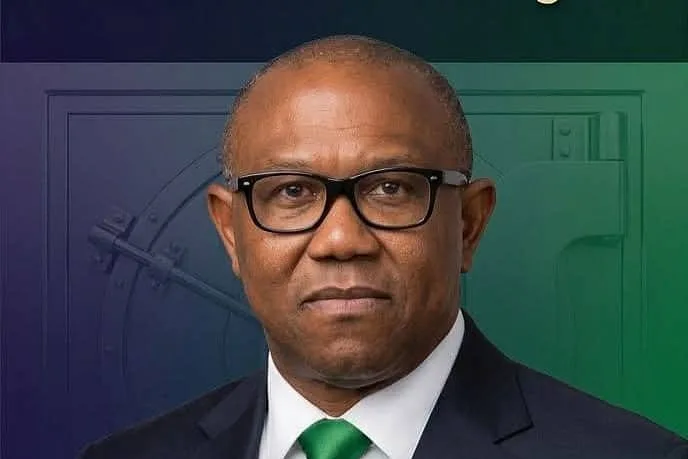
You may think I’m being hard on Peter Obi as an Obedient, but I want you to be objective and view this opinion for academic excersise. A state is not a private hedge fund; it is a socio-economic entity that requires constant nurturing and physical development. A governor who chooses the safety of a bank vault over the brutality of the construction site is a leader who has chosen to play it safe at the expense of the people. In the business of power, the only legacy that matters is the one built in stone, steel, and improved lives. Not the one written on a bank slip.
Order for my new book “The Business of Power.” See comment section for details.
–Ikerionwu is a Minister | Author | Conference Speaker | Entrepreneur | Conversation Starter