Rethinking Nigeria’s debt debate — by Isaiah Osezele
Nigeria’s public debt conversation is often framed in alarmist terms, but much of the anxiety stems from a fundamental misunderstanding of how modern economies use credit.
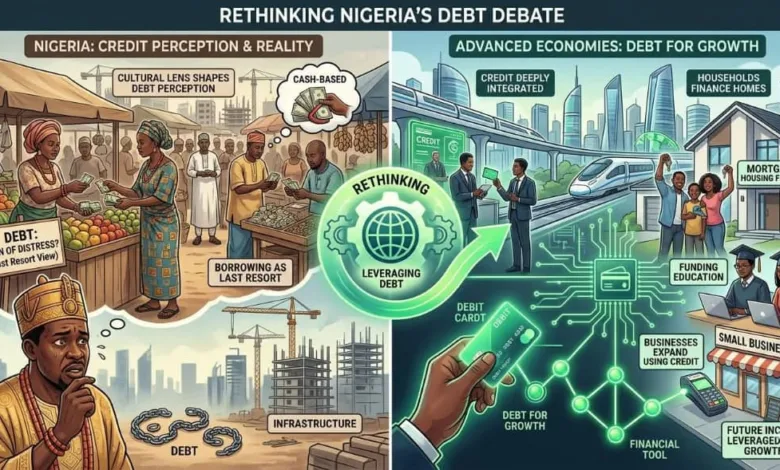
Unlike advanced economies where credit is deeply integrated into daily life, Nigeria remains largely cash-oriented. For many citizens, borrowing is seen less as a financial tool and more as a last resort. This cultural lens shapes how government debt is perceived—frequently as a sign of distress rather than a mechanism for growth.
Yet, in most developed systems, borrowing is neither unusual nor inherently problematic. Households finance homes through mortgages, fund education over time, and expand businesses using credit. The underlying principle is straightforward: future income is leveraged to meet present needs.
Governments operate on a similar, though more complex, framework.




Public borrowing allows states to undertake large-scale investments that current revenues cannot immediately support. Infrastructure—transport networks, power systems, healthcare and education—requires upfront capital with long-term payoffs. Delaying such investments until sufficient savings are accumulated would significantly slow economic progress.
However, the critical distinction is not whether a country borrows, but how effectively borrowed funds are deployed.
Debt that finances productive assets can enhance economic capacity, raise output, and improve revenue generation over time. In such cases, borrowing is not merely sustainable—it is strategic. Conversely, debt used to fund recurrent expenditure or lost to inefficiencies imposes future obligations without strengthening the economy’s ability to meet them.
This is where metrics such as GDP become relevant. A country’s output provides a broad indication of its capacity to sustain and service debt. Larger, more productive economies can carry higher debt levels because their revenue base is stronger and more diversified.
Globally, this dynamic is evident. The world’s largest economies—including the:
United States – ~$34–39 trillion
China – ~$18–19 trillion
Japan – ~$9–10 trillion
United Kingdom – ~$3–4 trillion
France – ~$3–4 trillion
Italy – ~$3 trillion
India – ~$2–3 trillion
Germany – ~$2–3 trillion
Canada – ~$1–2 trillion
Brazil – ~$1–2 trillion
—hold the largest absolute debt stocks.
The more instructive measure is the relationship between debt and economic output, not the headline figures alone.
For Nigeria, the implication is clear. The debate should move beyond binary arguments about borrowing and focus instead on the quality, efficiency, and economic returns of debt-financed spending.
At its core, public debt is a policy tool. Its effectiveness depends on discipline, transparency, and alignment with long-term growth objectives.
Without that shift in focus, Nigeria risks sustaining a debate that is loud, but ultimately misdirected.