Sanwo-Olu commissions Eyo monument, reaffirms commitment to Lagos cultural identity
By Adeola Ogunrinde –
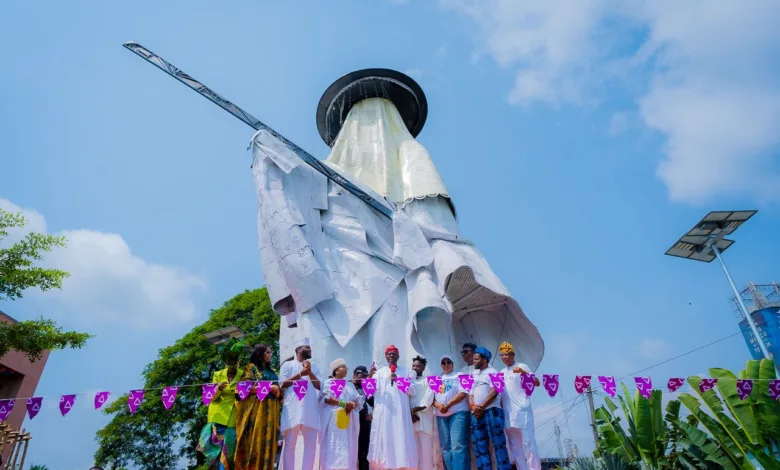
Governor Babajide Sanwo-Olu of Lagos State on Friday commissioned the Eyo Monument at the John Randle Centre for Yoruba Culture and History in Onikan, Lagos Island, describing it as a powerful symbol of the state’s heritage and a boost to cultural tourism.
The governor said the nearly 40-foot-high monument would serve educational and tourism purposes while contributing to the economic and cultural development of Lagos. He noted that the monument reflects the essence of Lagos culture and identity.
Sanwo-Olu explained that the location of the monument within the John Randle Centre makes it a fitting landmark for preserving and showcasing Yoruba art, history and tradition, adding that the Eyo symbol tells the story of Lagos to the world.


He said the installation reinforces the state’s commitment to protecting its cultural assets and positioning Lagos as a global destination for arts and heritage tourism, where visitors can learn, take photographs and share the history of the state.
The governor commended the curator, Dotun Popoola, for his craftsmanship and creativity, describing the monument as a reflection of Nigerian excellence and a demonstration of how indigenous talent can be harnessed to preserve history through art.
Sanwo-Olu also acknowledged the support of the Ministry of Tourism, Arts and Culture, stakeholders and traditional institutions, particularly the Oba of Lagos, Oba Rilwan Akiolu, stressing the importance of collaboration in sustaining the state’s cultural legacy.
Earlier, the Chief Executive Officer of the John Randle Centre for Yoruba Culture and History, Qudus Onikeku, described the monument as a major cultural achievement, noting that visitors can explore its interior to learn about Lagos, its communities and history through exhibitions.
Also speaking, curator Dotun Popoola said the Eyo monument was conceived as a storytelling structure that reflects Lagos’ historical journey, adding that visitors will be able to climb into the monument to explore curated spaces and visual narratives of the state’s cultural evolution.