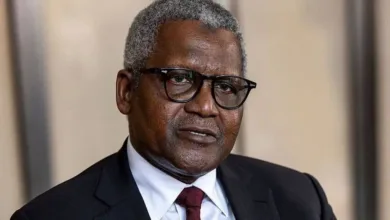
The merger that changed African banking: Tony Elumelu’s candid reflection — by Gilbert Ayoola

A compilation recall of interview by Gilbert Ayoola
Business Regret and the Birth of a Financial Giant
Business history is often written through the lens of success, celebrating milestones, profits, and industry-defining achievements. Yet behind many celebrated corporate victories lie difficult decisions, strategic compromises, and moments of reflection that only become clearer with time. Such was the case when renowned African banker, investor, and philanthropist Tony O. Elumelu sat down with veteran journalist Shaka Ssali on Talk Africa for an insightful conversation that peeled back the layers of one of Africa’s most consequential banking transactions.
During the interview, Elumelu offered an unusually candid assessment of the merger between Standard Trust Bank (STB) and United Bank for Africa (UBA)—a transaction widely regarded as one of the defining moments in Nigeria’s banking evolution. While the merger ultimately created one of Africa’s largest financial institutions and laid the foundation for UBA’s continental expansion, Elumelu revealed that, if given another opportunity, he would have made a different strategic choice.
In what many viewers considered one of the most striking revelations of the interview, Elumelu described the merger as his most regrettable business decision not because it failed, but because of the unforeseen strategic opportunities it created for competitors.
Reflecting on that pivotal period, he explained that the decision was far from personal. It was a collective resolution reached after extensive deliberations with his partners and fellow stakeholders. The merger demanded enormous sacrifice, careful negotiation, and strategic vision. At the time, consolidating both institutions appeared to be the most effective path toward building a stronger and more competitive banking powerhouse capable of thriving within Nigeria’s evolving financial landscape.




However, with the benefit of hindsight, Elumelu acknowledged that maintaining Standard Trust Bank as an independent institution might have produced even greater long-term strategic advantages.
At the time of the consolidation, Standard Trust Bank was Nigeria’s fifth-largest bank, while United Bank for Africa ranked third. Their combination instantly produced a dominant financial institution with greater capital strength, broader market reach, and enhanced operational capacity.
Yet the consolidation also had unintended consequences.
According to Elumelu, merging the two leading institutions created a significant gap within the banking industry. By removing one of the country’s strongest competitors from the marketplace, space was inadvertently created for another ambitious institution to emerge and occupy that position. What seemed like a strategic consolidation simultaneously opened fresh opportunities for new players to gain market share, strengthen their competitive positions, and reshape Nigeria’s banking hierarchy.
Beyond the competitive implications, Elumelu also recalled the enormous operational complexities involved in integrating two established financial institutions.
Corporate mergers extend far beyond combining balance sheets. They require the alignment of organisational cultures, technological systems, governance structures, operational processes, human capital, customer relationships, and institutional identities. Elumelu acknowledged that these integration challenges proved far more demanding than many anticipated.
Successfully blending two large organisations required years of coordinated effort, difficult decisions, organisational restructuring, and continuous adaptation. These realities underscored the complexity of large-scale corporate transformations, even when the strategic rationale appears compelling.
Despite describing the merger as his greatest business regret, Elumelu made it clear that the experience became one of his most valuable leadership lessons. Rather than viewing the decision as a failure, he presented it as evidence that even successful outcomes deserve rigorous reflection. Exceptional leadership, he suggested, is measured not by never making difficult decisions, but by possessing the humility to reassess them and learn from their unintended consequences.
Throughout the conversation with Shaka Ssali, Elumelu emphasised the importance of strategic thinking, long-term vision, resilience, disciplined execution, and continuous learning. He highlighted that entrepreneurship and corporate leadership require courage not only to make bold decisions under uncertainty but also to openly acknowledge what could have been done differently.
The interview also reinforced one of Elumelu’s enduring leadership philosophies: every business decision carries both visible and invisible consequences. While some outcomes can be measured immediately through financial performance, others emerge years later through shifts in competition, market dynamics, innovation, and industry evolution.
Today, United Bank for Africa stands as one of Africa’s most influential financial institutions, operating across numerous African countries and maintaining an international presence. Yet Elumelu’s reflections remind business leaders that history is rarely as straightforward as success stories suggest. Behind every landmark achievement lies a complex sequence of decisions, trade-offs, risks, and lessons that continue to shape future generations of entrepreneurs.
His conversation on Talk Africa serves as a compelling reminder that leadership is not defined solely by victories. It is equally defined by the willingness to embrace introspection, acknowledge difficult truths, and transform experience into wisdom. In sharing his reflections on the STB–UBA merger, Tony Elumelu demonstrated that genuine leadership is rooted not only in building institutions but also in cultivating the courage to revisit pivotal moments with honesty, humility, and an unwavering commitment to learning.
For aspiring entrepreneurs, corporate executives, policymakers, and business historians alike, Elumelu’s reflections offer a timeless lesson: some of the most transformative decisions in business may also become the most profound teachers. Success is not merely about creating industry champions. It is about understanding the broader consequences of strategic choices and continually evolving through the lessons they leave behind.