Over a decade of shaping the LPG conversation in Nigeria, by Adedayo Oketola
My journey with Nigeria’s Liquefied Petroleum Gas (LPG) industry began in 2009, two years after NLNG led the charge to establish the Domestic LPG Supply Project. At that time, awareness, infrastructure, and consumption were still at very early stages of development.
I covered major global industry events, including the 22nd World LPG Forum in 2009 in Rio de Janeiro, Brazil, and the 26th edition in 2013 in London. These were defining moments that shaped my long-term view of gas as a true enabler of energy access and economic transformation.
Back in 2013, the average LPG consumption in sub-Saharan Africa was 2.5kg per person per year, while Nigeria’s was just 0.8kg per person per year, barely 150,000 tonnes annually. In an interview I conducted (published on December 5, 2013) with Mr James Rockall, CEO and Managing Director of the World LP Gas Association, he said, “In the short term, one million tonnes of LPG per year is really an achievable target for Nigeria. We desired that by 2015, we should have one million tonnes of LPG being consumed per year in Nigeria.”
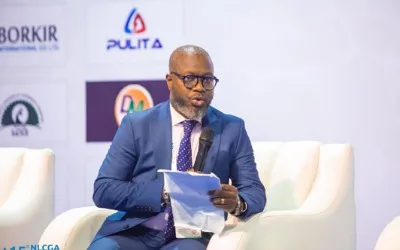
Fast forward 11 years, after transitioning from field reporting to editorial and leadership roles, I returned to the LPG ecosystem in a new capacity; this time, as a moderator at the 15th Nigeria Liquefied and Compressed Gases Association Conference & Exhibition, themed “Gas: Economic Diversification and Private Sector Growth.”

The session I moderated, “Supply as a Mechanism to Drive Lower Prices and Gas Adoption”, brought together brilliant minds: Effiong Udofia Okon, MD, ANOH Gas Processing Company Limited; Engr. Timothy Bibowei Fakrogha, GM, Commercial, NLNG; Olujimisayo Abe, ED, Gas Distillates & Other Products, NNPC Trading and Mr. Abu Folami of Asiko Energy (represented by Busayo Fabunmi).
We examined how Nigeria can translate its vast gas reserves into affordable, accessible energy for homes, businesses, and industries across Africa. Our conversation explored three critical areas: Expanding supply infrastructure such as pipelines, storage, transportation, and distribution networks; reforming pricing, incentives, and partnerships to drive competitiveness; and leveraging innovation and investment to deepen energy inclusion sustainably.
As I noted during the session: “When supply becomes reliable, efficient, and competitive, prices fall, industries thrive, and adoption accelerates.”
On the sidelines of the conference, I had a stimulating discussion with Dayo Adeshina, reflecting on his impactful experience as Programme Manager for Nigeria’s National LPG Expansion Plan and Senior Special Adviser on Gas to the Vice President. I also had the pleasure of reconnecting with the CEO of Banner Energy, a long-time player in Nigeria’s LPG ecosystem whose commitment to the sector continues to drive innovation and access.
It’s been over a decade since I first began documenting Nigeria’s gas journey. To stand today not just as an observer, but as a participant in shaping the discourse, is both humbling and fulfilling. Nigeria’s gas story is still being written, and the next chapter depends on how we align policy, private investment, and people to create lasting energy inclusion.
–Oketola, former Editor of Punch Newspaper covered Oil and Gas for many years