2027: Adebayo’s intellectual edge stands out among presidential candidates — Kavwam
With its ethnic, religious and political diversity, as well as its strategic geographical position, the Middle-Belt region has historically played an important role in shaping Nigeria’s political direction.
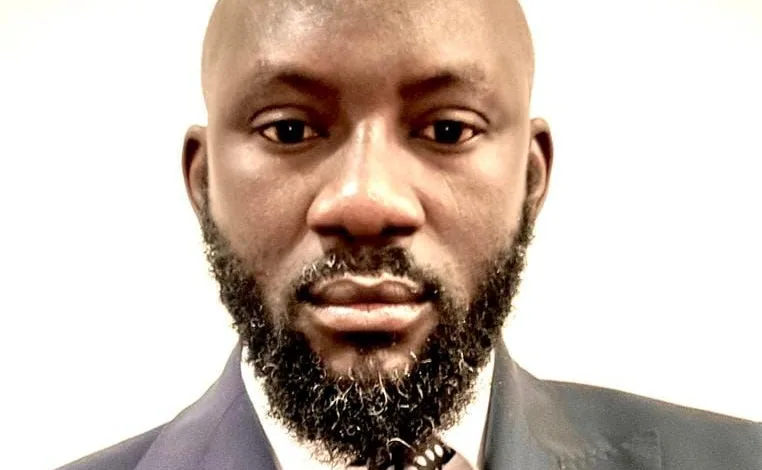
Stanley Kavwam, Ph.D., Deputy National Publicity Secretary of the Middle-Belt Forum, university lecturer, and World Bank consultant, in this interview with journalists, explains why the region’s engagement with Prince Adewole Adebayo, presidential candidate of the Social Democratic Party (SDP), could have significant implications for the 2027 election. He argued that Adebayo’s understanding of the Middle Belt, his record outside government and his message of national renewal could resonate strongly with voters who are increasingly looking beyond the traditional political establishment. Excerpts
Who is Stanley Kavwam?
Stanley Kavwam, Ph.D., is the Deputy National Publicity Secretary of the Middle-Belt Forum, a university lecturer, World Bank consultant and a truth seeker with an uncompromising commitment to altruism.
Why is the Middle Belt meeting with Prince Adewole Adebayo?
The Middle Belt region, comprising Southern Borno, Southern Kebbi, Southern Yobe, Southern Bauchi, Southern Kaduna, Adamawa, Gombe, Taraba, Benue, Plateau, Niger, Kwara, Kogi, Nasarawa and the Federal Capital Territory, is a strategically important part of Nigeria where diverse ideas, cultures and values converge to shape the Nigerian state.
Collectively, these states represent diverse ethnic nationalities united by a shared destiny, forming a formidable political bloc. Against this backdrop, the visit of Prince Dr. Adewole Adebayo to the Middle-Belt Forum, as the first engagement of a presidential candidate with the group ahead of the 2027 presidential election, holds significant potential for his electoral prospects.
This is premised on the incontrovertible fact that the Middle Belt demonstrated its political influence and strategic importance in the 2023 election, challenging the long-held perception that the North was politically monolithic.
The region’s political strength came into sharp focus in 2023 when it largely threw its weight behind the presidential ambition of Peter Obi of the Labour Party, endorsing him as its preferred candidate. The strong performance of the Labour Party across several Middle-Belt states was, therefore, a testament to the region’s considerable political influence.
Prince Dr. Adewole Adebayo’s visit is consequently a strategic and well-orchestrated political engagement that could significantly alter the calculations of other presidential candidates, particularly as his manifesto resonates with the collective aspirations, interests and sensibilities of the region.
What is the Middle Belt’s interest in Adebayo?
The illusion of one North is the tragedy that has plagued northern Nigeria and, by extension, the entire country for decades.
This is borne out of the fact that the Nigerian state owes much of its existence and continued unity to the Middle-Belt region, owing to the unifying sacrifices of its people, who have fought relentlessly to preserve Nigeria as an indivisible and indissoluble nation.
It is therefore pertinent to state, without any vestige of pessimism, that the numerical strength of the Middle Belt is such that its political significance cannot be ignored in any serious calculation about power in Nigeria.
The Middle Belt possesses the numerical strength, diversity and political reach required to play a decisive role in determining who becomes president of Nigeria, particularly when its interests are articulated and pursued collectively.
Can the Middle Belt deliver Adebayo?
The Nigerian state has been held together by the diversity and plurality of the Middle Belt since independence in 1960. Despite what many perceive as the domineering posture of the political establishment in parts of the North, and the political marginalisation of the Middle Belt in some instances through institutions of state, the significance of the region in Nigeria’s political configuration continues to gather momentum.
The age-long narrative propagated by some mischief-makers that only the so-called oligarchic North holds the political strings in the region is rapidly evaporating. The Muslim-Muslim ticket, which was presented by some political actors as evidence of political dominance in the North, has instead exposed the deep political, social and security challenges confronting the region.
The activities of terrorists operating across different fronts have brought unprecedented suffering to communities and citizens. Consequently, any political conversation about Nigeria that leaves the Middle Belt out is bound to have serious consequences. As the legendary Afrobeat musician Fela Kuti would say, such exclusion can only bring trouble, sorrow and blood.
Among all the presidential candidates, Adebayo is the youngest and probably the only one who has never held public office. Does that count in the election?
The intellectual sagacity and cerebral fecundity of Prince Dr. Adewole Adebayo are, in my view, matchless among the presidential candidates in the build-up to the 2027 presidential election. His capacity cannot be limited by age or conventional political experience, particularly when one considers the type of experience that many of our politicians have accumulated over the years.
The experience our politicians have brought into governance has, in many instances, been associated with allegations of public theft, corruption and the mismanagement of our commonwealth.
Adebayo offers something different. He represents a generation of Nigerians who are not defined by decades of occupying political offices but by their intellectual capacity, professional accomplishments and ideas about how to transform the country.
How familiar and popular is the SDP in the Middle Belt?
The popularity of the SDP, not only in the Middle Belt but across Nigeria, is not something that can simply be dismissed.
The party occupies an important place in Nigeria’s political history. The 1993 presidential election, in which Chief M.K.O. Abiola contested under the SDP, remains a defining moment in the country’s democratic history.
Given this historical antecedent, the SDP is certainly not an unfamiliar political platform to Nigerians. Many older Nigerians are familiar with its identity, history and symbolism.
The challenge before the party now is to reconnect that historical identity with the aspirations of a new generation of voters.
Politics is local. Why have such a meeting in a metropolitan city like Abuja? Why not within the locality?
Abuja is the headquarters of Nigeria and is also within the geographical Middle-Belt region. It houses the secretariat of the Middle-Belt Forum. Therefore, it is entirely appropriate for the Forum to receive a presidential candidate of the SDP in Abuja.
The meeting should be seen as an engagement with the broader Middle Belt and not merely as a meeting confined to one locality.
What do you think Adebayo brings to the table that is difficult to find among other presidential candidates?
His understanding of the dynamics of the Middle Belt region and the challenges of its people over the years is one of his greatest strengths. More gratifying is his in-depth knowledge of the enormous wealth of the Middle Belt and the vast potential of its people for wealth creation and nation-building.
The Middle Belt possesses enormous agricultural, mineral, human and economic resources. What has been lacking is a leadership framework capable of transforming these resources into sustainable prosperity.
In my assessment, no presidential candidate comes close to Prince Dr. Adewole Adebayo in his understanding of these possibilities and the potential of the region to become a major engine of Nigeria’s economic transformation.