Adebayo unveils plan to end import dependency, pledges production-driven Nigeria

…proposes Bank of Electricity in economic shift
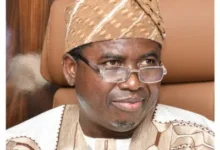
The presidential candidate of the Social Democratic Party (SDP), Prince Adewole Adebayo, has unveiled an ambitious four-year economic plan aimed at reducing Nigeria’s dependence on imports and transforming the country into a production-driven economy by 2031.
The blueprint, titled Farewell to Poverty and Insecurity, represents a sharp break from the consumption-oriented policies that have long defined the nation’s economic trajectory.
Adebayo argued that Nigeria must move away from merely managing poverty and towards actively building productive capacity, creating wealth, and generating sustainable employment for its rapidly growing population.


The economic chapter of his agenda is anchored on five core principles: self-reliance and import substitution, full employment and poverty elimination, balanced regional development, speedy implementation, and strategic government intervention where private investment falls short. These pillars are designed to work in tandem, ensuring that no sector or region is left behind in the push for industrial renewal.
Adebayo’s proposal envisions a value-chain approach where farmers are not just producers of primary goods but active participants in processing and packaging. Adebayo stated that this shift would reduce the annual billions spent on food imports while positioning Nigeria as a net exporter of processed agricultural commodities to regional and global markets.
To achieve this agricultural transformation, Adebayo’s economic blueprint proposes expanded irrigation, mechanization, improved seeds, fertilizer access, credit facilities, and extension services, alongside the establishment of agro-processing hubs across the six geopolitical zones.
He added “These hubs are intended to serve as focal points for rural development, reducing post-harvest losses and connecting smallholder farmers directly to industrial buyers. By decentralizing processing capacity, the plan also aims to curb rural-urban migration and stimulate economic activity in underserved communities. Beyond agriculture, the plan calls for regional industrial clusters focused on sectors such as textiles, pharmaceuticals, automobile assembly, electronics, and building materials. Small and medium-sized enterprises would receive improved access to affordable credit, guarantee schemes, and technical support to foster innovation and scale production”.
One of the plan’s most striking proposal is the establishment of a Bank of Electricity, a dedicated financing institution that would provide long-term, single-digit-interest loans for distributed power generation and the local production of transformers, meters, cables, solar panels, batteries, and other electrical equipment.