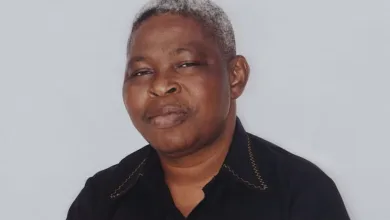
Self-representation and its implications on Nnamidi Kanu’s case and the Nigerian judicial system, by Oluwadare Ayeni

The right to self-representation remains one of the most fundamental guarantees in any democracy governed by the rule of law. It is the legal expression of the idea that every person has the inherent right to defend themselves before a court of justice, whether or not they can afford a lawyer. In Nigeria, this right is enshrined in Section 36(6)(c) of the 1999 Constitution, as amended, which provides that every individual charged with a criminal offence shall be entitled to defend himself in person or by a legal practitioner of his own choice. While this right has always existed in theory, its exercise in practice, and the way the judiciary responds to it, has far-reaching implications for justice delivery, particularly in politically sensitive cases like that of Nnamdi Kanu, the leader of the Indigenous People of Biafra, IPOB.
Nnamdi Kanu’s prolonged legal battle with the Federal Government of Nigeria has exposed several complexities within the Nigerian judicial process. His case, which involves charges ranging from treasonable felony to terrorism-related offences, has tested the boundaries of fair hearing, the independence of the judiciary, and the rights of self-representation. Though Kanu has consistently been represented by a team of lawyers, there have been moments when he expressed dissatisfaction with his legal counsel and hinted at defending himself in person. These moments invite a broader discussion about how self-representation functions in Nigeria and what it reveals about the strengths and weaknesses of the system.
Historically, Nigeria has witnessed a few notable examples of self-representation in its courts. One of the landmark cases that shaped the interpretation of this right was F.O.M. Atake v. Chief Nelson Asigboro Afejuku (1994) 9 NWLR (Pt. 368) 379. In that case, Justice Franklin Oritse-Muyiwa Atake, a retired judge of the Bendel State High Court, personally instituted a private prosecution against a defendant who had published defamatory statements about him. The defence argued that Atake, being a retired judicial officer, was barred from practising law and therefore could not conduct his case. The Supreme Court dismissed this argument and held that the constitutional prohibition against a retired judge acting as a legal practitioner did not stop him from defending his personal rights in court. The Court stated clearly that representing oneself is not the same as practising law for another person. This decision remains a cornerstone of Nigerian jurisprudence on self-representation, affirming that no rule of professional conduct or constitutional restriction can deprive a citizen of the right to appear in person before a court of law.
Another relevant precedent can be found in Fawehinmi v. Nigerian Bar Association (1989). Chief Gani Fawehinmi, the late human rights lawyer and activist, often argued his own cases before the courts, refusing to rely on other lawyers even when the Nigerian Bar Association sought to discipline him. The court in that case recognised the autonomy of every litigant, whether legally trained or not, to appear for themselves. Though Fawehinmi was a lawyer, his insistence on conducting his cases personally became symbolic of the constitutional liberty of self-representation in Nigeria.




In lower courts, there are also examples of self-represented citizens who have won their cases. Some detainees have successfully filed Fundamental Rights Enforcement Applications without legal aid, challenging unlawful detentions or abuses of power. Under the Fundamental Rights (Enforcement Procedure) Rules 2009, an individual can directly approach the High Court for the protection of their rights without necessarily hiring counsel. These cases, though rarely publicised, have shaped the practical meaning of access to justice in Nigeria.
The implications of these precedents for Nnamdi Kanu’s case are significant. If Kanu were to represent himself, the law permits him to do so. However, the complexity of the charges, the political undertones of his trial, and the procedural technicalities involved make self-representation risky. In such politically charged trials, the state often deploys seasoned prosecutors, while the defendant faces not only the legal arguments but also the weight of national security narratives. For a self-represented defendant, especially one without formal legal training, such a scenario can tilt the balance of fairness. Nevertheless, allowing self-representation reinforces the constitutional principle that justice must be personal and participatory, that the accused should have a voice, not just a lawyer.
From a broader perspective, the concept of self-representation raises both hope and concern for the Nigerian judicial system. On one hand, it enhances access to justice, especially for indigent citizens who cannot afford lawyers. It symbolises the idea that the courts belong to everyone, not just to those with legal expertise. On the other hand, it exposes the inefficiencies and rigidity of a judicial system that often appears intimidating and inaccessible to ordinary people. Many self-represented litigants struggle with procedural rules, complex legal drafting, and the formalities of courtroom advocacy. Without legal aid or judicial guidance, their cases are easily struck out on technical grounds.
The Nnamdi Kanu case brings these tensions to the forefront. It challenges Nigerian courts to balance procedural formality with the substance of justice. If a person like Kanu, whose trial has become a national spectacle, were to represent himself, the courts would have to navigate between upholding strict legal procedure and ensuring that his right to fair hearing is not lost in technicalities. The test is not merely about Kanu’s guilt or innocence, it is about whether the Nigerian judiciary can uphold the spirit of constitutional justice in a politically sensitive environment.
In conclusion, self-representation in Nigeria is more than a procedural right, it is a democratic statement. Cases like Atake v. Afejuku and Fawehinmi v. NBA have shown that individuals can confront the machinery of the law by themselves and prevail. Yet, the practical reality remains that Nigeria’s courts are still largely inaccessible to the unrepresented. The lesson from Nnamdi Kanu’s experience and similar high-profile trials is that justice must never be seen as the exclusive domain of legal professionals. For a judiciary to retain public confidence, it must make room for every citizen, lawyer or not, to have their day in court and to be heard with fairness, dignity, and equality before the law.
Oluwadare Ayeni, PhD
Associate Professor of African Democratic Studies and Public Governance, Department of Public Administration, Obafemi Awolowo University, Ile-Ife